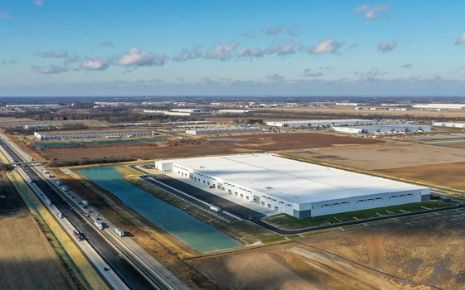
Data Center Myths vs. Reality at the Mt. Comfort Technology Campus

Articles, News
When Hancock County residents first learned about a proposed data center project in 2025, many voiced concerns about its impact on the community. As a result, strong public opposition led to the project's withdrawal.
Now, a new proposal is following a much different process.
EQT Real Estate has submitted a letter of intent for the Mt. Comfort Technology Campus, planning a data center on about 130 acres near County Roads 500 North and 500 West. The project would be built in phases from 2027 to 2030 and could include up to 4 million square feet of space.
The Hancock Economic Development Council knows residents have questions about what this project could mean for the county. That’s why HEDC is sharing information about the proposal, its expected impacts, and the safeguards included.
The county now has a new data center review process that requires extra steps, including public input and final approval by the Board of Commissioners. The current proposal is still going through this process and has not yet been approved.
Below are 10 common questions and concerns about data center development, along with the facts we currently have about the Mt. Comfort Technology Campus.
Myth 1: Data centers will increase electric bills
Reality: The project is structured so current customers will not pay for the electricity or infrastructure the campus needs.
EQT plans to pay for the electrical infrastructure needed for the project, including about $125 million in transmission improvements. The future tenant would cover its own energy, capacity, and generation costs.
Wabash Valley Power Alliance and NineStar Connect, both member-owned electric cooperatives, would provide power to the campus. The proposal uses a Bring Your Own Generation setup to keep the project’s power costs separate from current customers.
Myth 2: Taxpayers will pay for the project's infrastructure
Reality: The developer would pay for the infrastructure needed for the campus.
This includes the estimated $125 million for transmission infrastructure. EQT also plans to work with Hancock County to extend Aurora Way through the property and coordinate road improvements during construction.
The project is also expected to bring in significant revenue for the county. Once fully built, it could provide about $22 million each year, plus a one-time payment of around $22.2 million at the start.
Myth 3: A data center will drain the community's water supply
Reality: The proposed campus would use a closed-loop, air-cooled cooling system.
The cooling system would be filled when each building is ready, then it would keep recirculating the same fluid. The project would use public water service and would not rely on groundwater wells.
Most daily water use would come from regular needs such as restrooms, sinks, humidification, and landscaping. Average daily water use is expected to be about 9,200 gallons. On a peak day, when several uses happen at once, it could reach about 26,300 gallons.
Myth 4: The data center will sit next to homes
Reality: The proposed campus is in an area planned for industrial use and is separated from nearby homes.
The closest home is more than 2,400 feet from the property line, and the nearest residential subdivision is about half a mile away. The project also includes setbacks, perimeter berms, buffer planting, and other design features to provide extra separation between the campus and nearby properties.
Myth 5: The project will create significantly fewer jobs than other projects
Reality: Data centers need workers during construction, but fewer staff once they are operating.
At peak construction, the project could support up to 1,500 skilled trade jobs, including electricians, pipefitters, HVAC technicians, and ironworkers.
Once the campus is running, it is expected to employ about 100 to 150 permanent staff in technical and operational roles, with wages usually about 50% higher than county averages. Local contractors, suppliers, and vendors could also benefit from ongoing work.
Myth 6: A data center will create major traffic problems
Reality: The project is expected to create much less daily traffic than many typical industrial developments.
The proposal estimates about 100 to 150 employee trips per day once the campus is operating. In comparison, a typical industrial development on the same site could generate around 3,000 daily vehicle trips. Traffic will temporarily increase during construction as buildings and infrastructure are built. This will happen only during construction, not after the campus opens.
Myth 7: Data centers will reduce nearby property values
Reality: Research cited in the project materials does not show that operating data centers lower residential property values.
The proposal cites studies from George Mason University and Integra Realty Resources that looked at property values near operating data centers. These studies found that home values continued to rise and found no statistical evidence that being near a data center reduced property values. The Mt. Comfort proposal also includes physical separation from nearby residential properties, along with planned berming, screening, noise controls, and lighting requirements.
Myth 8: Data centers will create constant noise
Reality: Noise control is included in the project’s operating requirements.
The campus would have a noise limit, supported by independent acoustic studies done before and after development. Planned measures include choosing quieter equipment, perimeter berms, buffer planting, and other design features.
The project materials also say that emergency generators would be low-emission units, tested only during set times. These requirements set clear standards rather than general promises about noise.
Myth 9: The project will overload the power grid
Reality: The proposal includes dedicated power generation and transmission improvements paid for by the developer.
Wabash Valley Power Alliance completed a transmission study confirming the campus can be fully served once built. EQT would pay for the needed transmission infrastructure, including sole-use facilities and network upgrades estimated at $125 million.
This means the project includes new power generation and dedicated infrastructure, rather than relying on the existing power supply.
Myth 10: The community has no say in whether the project moves forward
Reality: Hancock County has set up a specific approval process for data center projects.
Under the county's data center overlay ordinance, a proposed project must move through multiple stages before construction can proceed. The process includes:
- A letter of intent submitted to the Board of Commissioners
- A review by county commissioners against established criteria
- A declaratory resolution before the project enters the application phase
- Planning and rezoning review
- Technical review
- A public hearing before the Planning Commission
- A final vote by the Board of Commissioners
The ordinance also limits data centers to Industrial General zoning and gives several chances for public input. The county’s data center citizens committee is still considering additional requirements.
Get More Information About the Project
The Mt. Comfort Technology Campus is still just a proposal, and more information will be shared as it moves through Hancock County’s review process. HEDC believes residents should have clear information as things move forward, especially after the community’s response to the last data center proposal.
For more information about the Mt. Comfort Technology Campus, its expected community impacts, or economic development questions, contact the Hancock Economic Development Council. HEDC will keep sharing updates as the project moves through the county’s public review process. More information about the proposed project is also available on the Mt. Comfort Technology Campus’s website and Facebook page.
Photos
More Topics